Student · STEM Explorer · Communicator

Welcome! I’m Sahasra Natarajan.

I’m a rising eighth grader who loves exploring biotechnology, medical research, mathematics, and the ways ethical technology can improve human health. I also enjoy debate, public speaking, music, teaching, and building ideas that can grow into meaningful projects.

Biotechnology Medical Research Ethical AI in Health Mathematics Public Speaking
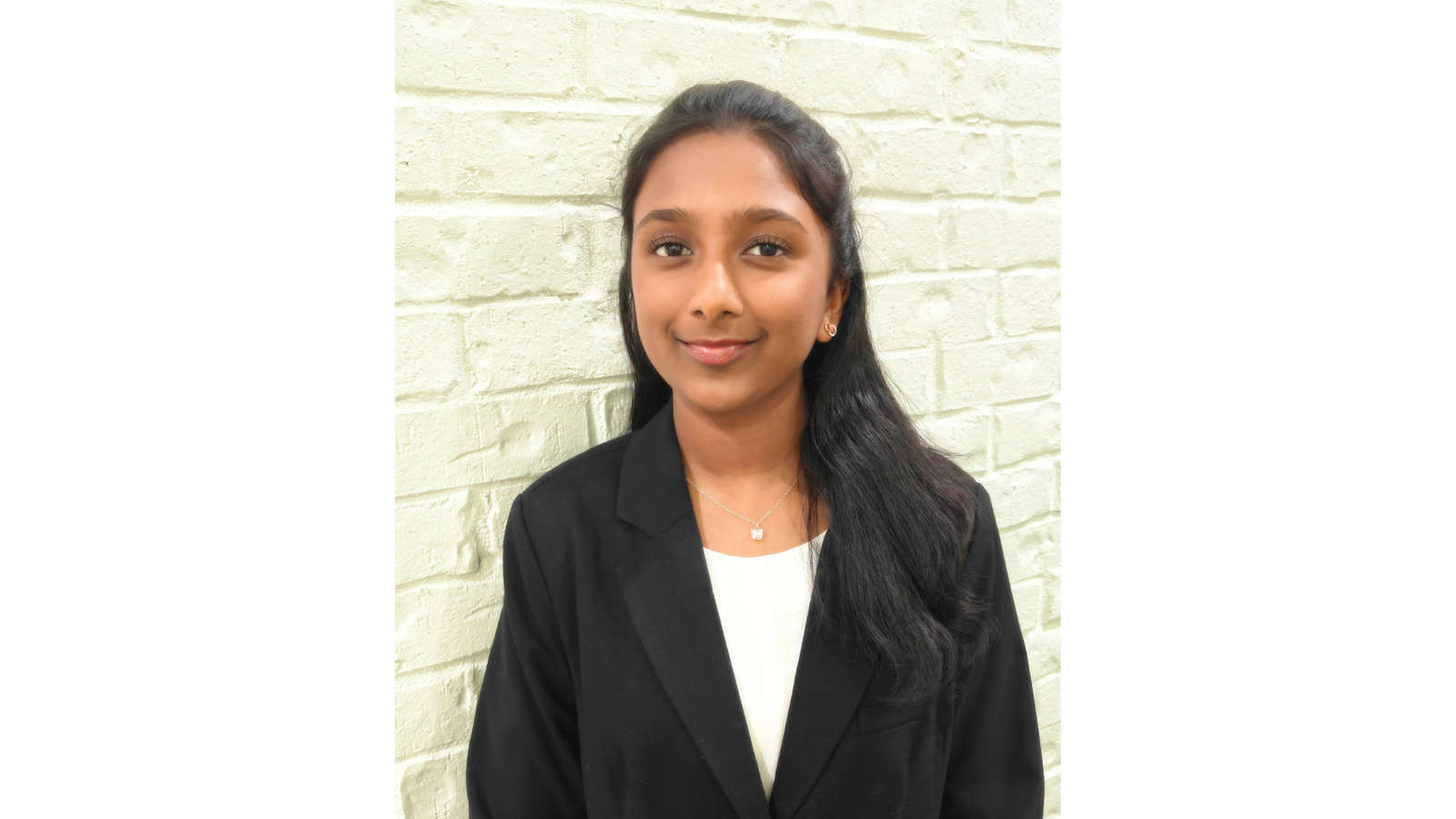
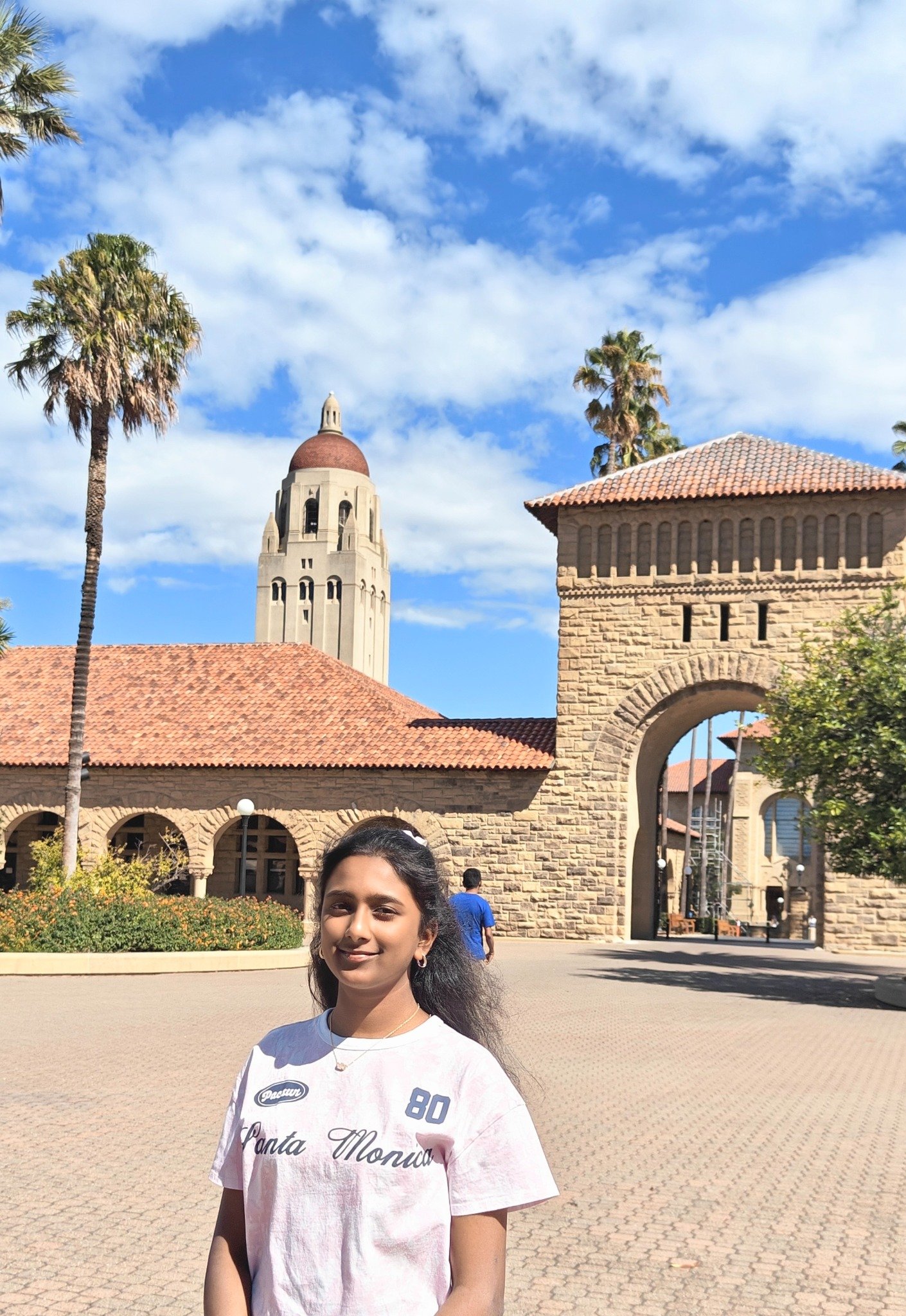
Portrait of Sahasra Natarajan
Forsyth County, Georgia Rising eighth grader at DeSana Middle School

About

Curiosity with purpose.

This site is a snapshot of the subjects, experiences, and communities that shape who I am.

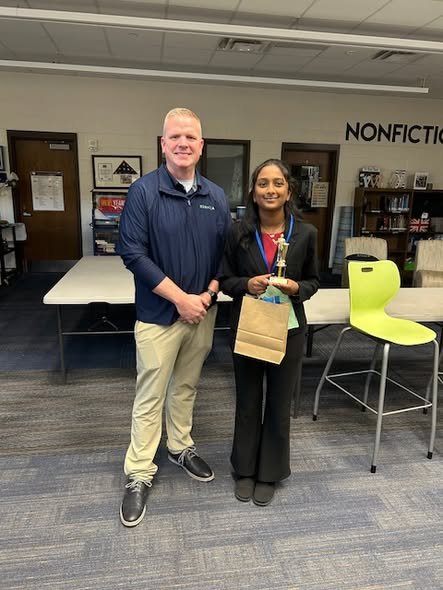
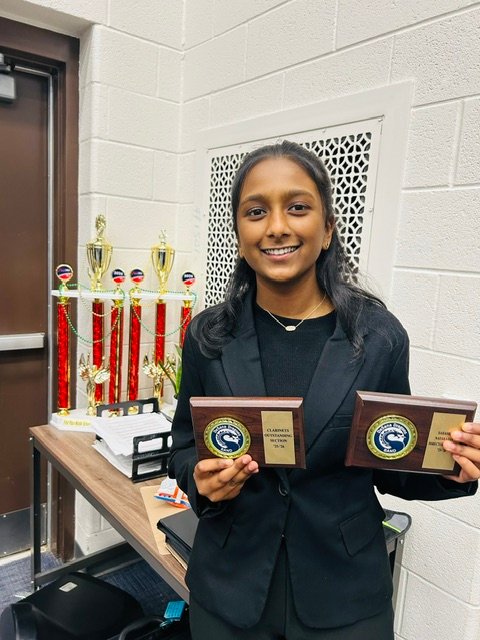
Sahasra receiving recognition at a school event

I am especially drawn to the life sciences because they combine careful research with the possibility of improving real lives. I enjoy learning how cells, genes, disease pathways, diagnostics, and emerging technologies connect.

Beyond STEM, I compete in mathematics and debate, perform in music, and enjoy teaching younger students. These experiences have helped me become a more thoughtful problem solver and a clearer communicator.

I have also launched a few educational YouTube channels centered on STEM. I value creating content that makes difficult ideas easier to understand, without making content creation the center of my work.

“I am motivated by questions that matter—and by the possibility that learning can eventually become service, research, or a solution.”

STEM focus

Biotech and medical research stand out most.

“I am most excited by areas where biology, engineering, data, and medicine come together.”

01

Biotechnology

I enjoy learning about genetics, synthetic biology, molecular systems, laboratory design, and the process of turning biological ideas into useful tools.

02

Medical Research

I am especially interested in cancer research, diagnostics, translational medicine, and how discoveries move from the laboratory toward patient care.

03

Ethical AI for Health

I want to understand how AI can support healthcare while respecting safety, fairness, privacy, and the needs of different communities around the world.

Journey

Experiences that are shaping my interests.

A selection of academic, creative, and leadership milestones.

2026

Denmark High School iGEM Summer Camp

Participating in a STEM-focused summer experience connected to synthetic biology, collaborative problem solving, research thinking, and biotechnology.

2026

Georgia Tech Summer Camp

Continuing to explore technology, engineering, and hands-on STEM learning in a university-based summer environment.

2025

Duke University Pre-College

Completed a technology and artificial intelligence pre-college experience with project-based learning and collaboration.

Ongoing

Mathematics and Debate

Competing in math and public forum debate has strengthened my reasoning, precision, confidence, and ability to explain complex ideas.

Ongoing

Music

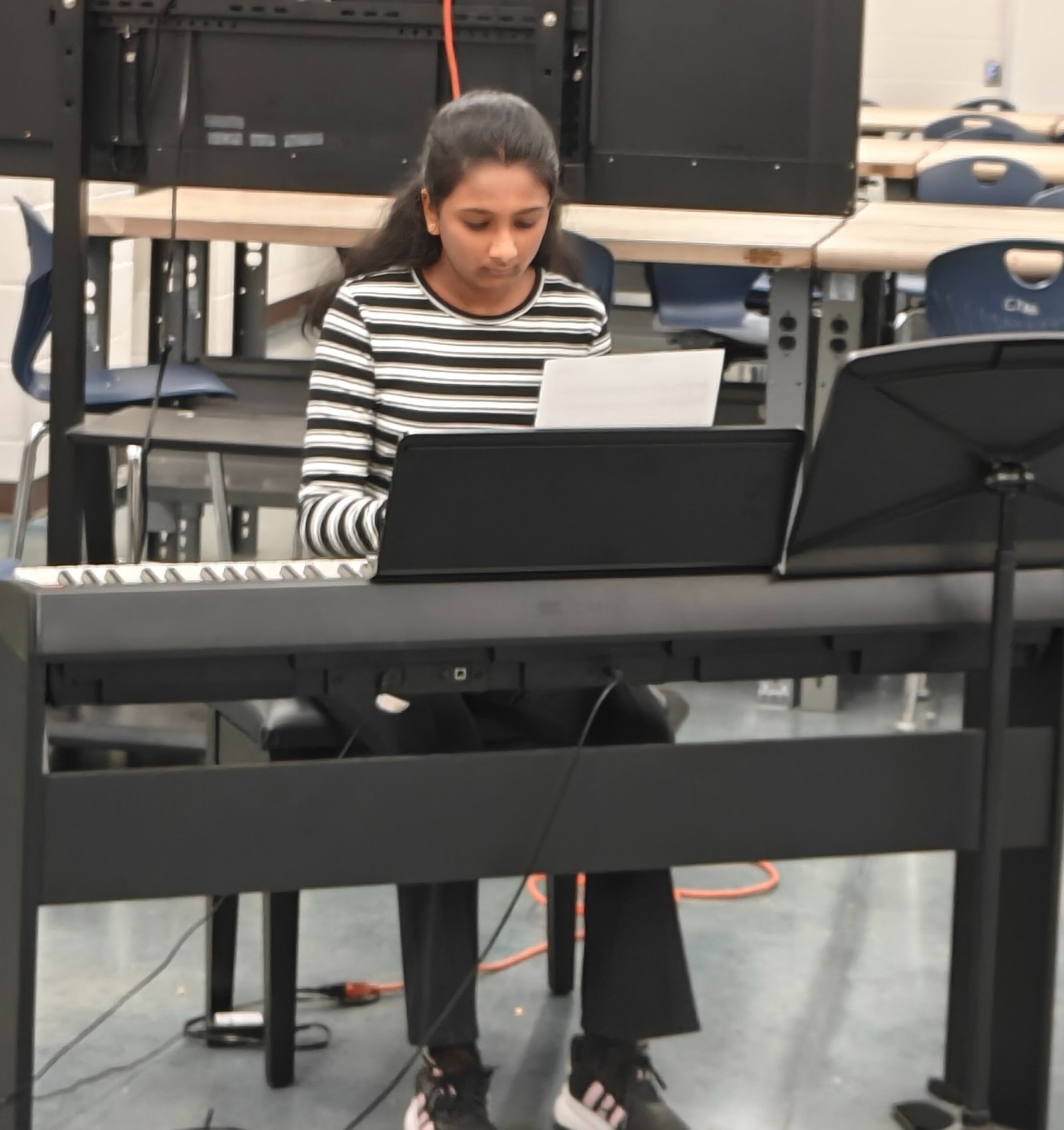
Training in Carnatic singing, piano, and clarinet has taught me discipline, listening, preparation, and creative expression.

Ongoing

STEM Communication

Through speaking, teaching, design, and digital projects, I practice sharing technical ideas in ways that are understandable and engaging.

Experience

Learning by doing.

Four areas where I have developed skills through consistent practice and responsibility.

Teaching

Nonprofit mathematics tutoring

I have experience teaching students through a nonprofit organization, helping younger learners build confidence and stronger mathematical thinking.

Mentoring · Communication · Service
Communication

Debate and public speaking

Public forum debate and oratorical speaking have taught me how to research carefully, organize arguments, respond under pressure, and speak with clarity.

Research · Persuasion · Leadership
Creative work

Educational STEM channels

I launched a few educational YouTube channels related to STEM, using scripting, design, and video production to communicate ideas in an accessible way.

Scripting · Design · Digital media
Music

Clarinet, piano, and Carnatic singing

Years of musical practice and ensemble participation have strengthened my discipline, attention to detail, and ability to contribute to a team.

Performance · Consistency · Collaboration

Journal

Ideas, questions, and reflections.

A growing collection of short science essays about what I am learning, what surprised me, and the questions I am still carrying forward.

Series 01

Researcher’s Notebook

Reflections on biotechnology, research, and the ideas that change how I understand science.

Series 02

AI in Healthcare

Exploring how machine learning can support medicine and the ethical questions that come with it.

Series 03

Beyond the Textbook

Scientific concepts that become more fascinating when they connect to real people and real problems.

Series 04

Behind the Experiment

Small laboratory moments, unexpected lessons, and what hands-on science teaches beyond the result.

Researcher's Notebook
Biology Isn't Just Studied Anymore. It's Engineered.
A week of biotechnology changed the way I think about biology, not only as something we study, but as something we may be able to design responsibly.

Until this summer, I thought biology was mostly about understanding life.

We study cells to understand disease. We study DNA to understand inheritance. We study proteins to understand how our bodies function. Biology felt like a subject built around observation. Scientists asked questions about the natural world, designed experiments, and slowly uncovered answers that had always been there.

That was the version of biology I knew.

Then I spent a week at the Denmark High School iGEM Biotech Bootcamp, and I left thinking about biology in a completely different way.

The biggest lesson I learned wasn't how to use a micropipette or how to extract DNA from strawberries. It wasn't even a specific scientific concept. It was a shift in perspective.

I realized that biology is slowly becoming something we don't just study anymore. We're beginning to engineer it.

At first, that idea didn't seem like a huge difference. But the more I thought about it throughout the week, the bigger it became. Understanding biology and designing biology are two completely different ways of looking at the same field.

One asks, "How does nature work?" The other asks, "How could biology help solve problems that haven't been solved yet?"

I found myself thinking about that question long after the presentations ended.

Throughout the bootcamp, every activity connected back to this idea in some way. We extracted DNA, practiced using laboratory equipment, learned how bacteria can be modified, and heard members of the Denmark High School iGEM team explain their work on a project related to malaria.

What impressed me most wasn't simply the science itself. It was the way they approached it.

They weren't treating biology like a collection of facts to memorize. They were approaching it almost the way an engineer approaches a design challenge. They looked at a real-world problem and asked whether biology could become part of the solution.

I don't think I had ever thought about biology that way before.

The comparison that kept coming to mind was engineering. Civil engineers design bridges. Software engineers design algorithms. Mechanical engineers design machines. Synthetic biologists are beginning to design living systems.

That's an incredible idea to think about.

For a long time I've been drawn toward medicine, cancer research, artificial intelligence, biotechnology, and public health. I always thought of them as separate interests that happened to overlap. During that week, I started wondering if synthetic biology might actually be one place where all of those interests come together.

Of course, none of those ideas matter without understanding the basics first.

One thing our instructors kept emphasizing was how connected biology really is. DNA stores genetic information. RNA carries those instructions. Proteins perform much of the work inside cells. Every part depends on the others.

Before the bootcamp, I tended to think about those topics separately because that's often how they're taught in school. Now I picture them as one continuous system.

That's also why mutations have become so fascinating to me. A change in just one nucleotide can eventually affect a protein, influence how a cell behaves, and sometimes contribute to disease. It's amazing that something so small can create effects that become so significant.

As someone who's especially interested in cancer biology, I kept wondering how many important discoveries might begin with changes that are almost impossible to notice without careful research.

One of the moments I still find myself thinking about was the strawberry DNA extraction lab.

I'd seen pictures of DNA countless times. I'd memorized what it does. I'd answered questions about it on assignments. But I'd never actually seen it.

When those cloudy white strands slowly appeared in the test tube, it felt strangely different from anything I'd learned in a classroom. It didn't look dramatic. In fact, it looked surprisingly ordinary. But somehow that made it even more fascinating.

For the first time, DNA wasn't just an idea in a textbook. It was something sitting right in front of me.

The other lesson that surprised me had nothing to do with genetics. It had to do with precision.

At first, using a micropipette looked easy. It wasn't.

Every tiny movement mattered. Pressing the plunger too quickly, holding the pipette at the wrong angle, or measuring the wrong volume could all affect the experiment. After practicing a few times, I started to understand why researchers spend so much time perfecting techniques that seem simple from the outside.

Science isn't only about big discoveries. It's also about getting the small things right, over and over again.

Looking back now, I don't think the bootcamp gave me all the answers about biology. If anything, it left me with even more questions than I had before.

Before this summer, biology felt like a subject I wanted to learn. Now it feels like a field I want to keep exploring.

I arrived expecting to learn more about biology. I left thinking much more about its future. And honestly, I think that's an even more exciting place to begin.

Questions I’m Still Exploring

  • As synthetic biology becomes more powerful, how do we decide which applications are ethically responsible?
  • How might artificial intelligence change the way scientists design future biological systems?
  • Could engineering biology one day become as common as engineering software is today?
“Maybe the most exciting part of science isn't finding the answer. Maybe it's realizing there's an even better question waiting behind it.”
Researcher's Notebook
The Questions I Left With
The experiments were exciting, but the questions they left behind became the part I kept returning to.

One of my favorite things about science is that every answer seems to uncover three new questions.

When I was younger, I thought learning science meant gradually replacing uncertainty with certainty. I imagined that if I studied enough biology, solved enough math problems, and completed enough experiments, everything would eventually make sense.

The more I learn, the more I realize science doesn't really work that way.

Good science doesn't eliminate questions. It helps us ask better ones.

That was probably the biggest thing I took away from this summer.

I spent time learning about biotechnology, synthetic biology, and machine learning through hands-on activities, labs, and discussions. I learned how bacteria can be engineered, how DNA stores information, and how machine learning models improve by recognizing patterns.

Those ideas were fascinating. But what stayed with me wasn't just the science itself. It was the questions that kept appearing after each lesson.

If we can engineer bacteria to produce medicines today, what might become possible twenty years from now?

Could artificial intelligence help scientists discover treatments we haven't even imagined yet?

If AI becomes better at recognizing disease patterns, how will doctors decide when to trust it and when to rely on their own experience?

I caught myself thinking about those questions long after class had ended.

One idea I kept coming back to was the relationship between biology and engineering.

For a long time, I thought of biology as a subject where we observed the natural world. Engineering felt different because it focused on designing solutions. The more I learned about synthetic biology, the more those two subjects started blending together.

Instead of only asking how cells work, researchers are beginning to ask how cells might be redesigned to solve real problems.

I hadn't really thought about biology that way before. It changed how I picture the future of medicine.

At the same time, it also made me realize how much responsibility comes with that kind of technology.

Just because we can change living systems doesn't automatically mean we should.

How do we decide where the ethical boundaries belong? How do we make sure these discoveries improve healthcare for everyone rather than only the people who can afford them?

Those questions don't have simple answers.

One thing I've noticed about the researchers I admire most is that they don't pretend to know everything. They're comfortable saying, "We don't know yet." They change their minds when new evidence appears. They're excited about discovery, but they're also careful.

Right now, I'm still learning. I'm still reading articles that introduce ideas I've never heard before. I'm still discovering connections between artificial intelligence, biotechnology, medicine, mathematics, engineering, and even the way we communicate science to others.

Every time I learn something new, it seems to connect to something else I've been thinking about.

If this summer taught me anything, it's that science isn't about collecting facts until there are no mysteries left. It's about staying curious enough to keep exploring those mysteries, even when the answers aren't obvious.

I have a feeling the questions I'm asking today will be very different from the ones I'll be asking a few years from now. That's one of the things I'm looking forward to most.

Questions I’m Still Exploring

  • How can scientists communicate complex discoveries in ways that everyone can understand?
  • Which breakthroughs in biotechnology today will seem completely ordinary twenty years from now?
  • What questions should young researchers begin asking today that future generations will wish had been asked sooner?
“The more I learn, the less I worry about having all the answers. I'd rather keep finding better questions to ask.”
AI in Healthcare
Why Medical AI Isn't Really About Artificial Intelligence
The more I learn about medical AI, the more I see it as a tool for recognizing patterns, not replacing physicians.

When most people hear the words artificial intelligence, they imagine robots replacing doctors or computers making medical decisions on their own.

The more I've learned about AI, the less I think that's what the future will actually look like.

Instead, I think medical AI is really about something much simpler. It's about finding patterns.

That idea first clicked for me during a machine learning class this summer. We built simple models that recognized facial expressions, hand gestures, and everyday objects. At first, the projects just felt fun. We were teaching computers to tell the difference between a smile and a frown or between different hand signs.

It didn't seem like it had much to do with medicine.

Later, I realized we were practicing one of the same ideas behind modern medical AI.

Whether a computer is recognizing a hand gesture or helping detect cancer in a medical scan, it's solving a similar kind of problem. It's learning to recognize patterns from large amounts of data.

That changed the way I thought about artificial intelligence.

The computer isn't thinking the way a physician thinks. It isn't using intuition. It doesn't understand what a patient is feeling. It simply becomes very good at recognizing patterns that would be incredibly difficult for people to notice consistently.

I think that's what makes medical AI so exciting. Not because it's replacing doctors. Because it's giving them another tool.

Imagine looking at thousands of X-rays over an entire career. A radiologist develops incredible experience through years of training. Now imagine an AI system that has analyzed millions of images.

That doesn't automatically make the AI better. It simply means it may notice patterns that deserve another look.

I like thinking of AI as another set of eyes rather than another brain.

One thing I've also started appreciating is that medicine is rarely black and white.

Doctors don't rely on one piece of information. They consider symptoms, lab results, imaging, medical history, conversations with patients, and years of clinical experience before making decisions.

AI becomes one more source of information. Not the final answer. Just another piece of the puzzle.

The more I learn, the more convinced I become that medicine will always need human judgment, empathy, and communication.

Patients don't just need accurate diagnoses. They need someone who can explain what those diagnoses mean, answer difficult questions, and support families through uncertainty.

No algorithm can replace that.

Maybe the future of medicine isn't about building smarter machines. Maybe it's about building better tools so physicians can spend more time doing the things only people can do: listening, understanding, and caring for their patients.

Questions I’m Still Exploring

  • How can AI systems remain reliable across diverse patient populations?
  • Should every AI recommendation be explainable to physicians and patients?
  • What will compassionate healthcare look like in an age of intelligent machines?
“The more I learn about AI, the more I realize its greatest strength may not be replacing human intelligence. It may be helping us use it more effectively.”
AI in Healthcare
Teaching a Computer to See Changed How I Think About Diagnosing Disease
A simple image-recognition project made me think about medical imaging, fairness, and what happens when an algorithm is confidently wrong.

One of the simplest machine learning projects I worked on this summer ended up changing the way I think about healthcare.

The goal sounded straightforward. Train a computer to recognize facial expressions.

We created categories like happy, surprised, confused, and sad, then collected hundreds of photos from different angles and lighting conditions so the model could learn from them.

At first, it just felt like another coding project.

A few days later, something clicked. I realized the project wasn't really about facial expressions. It was about learning patterns.

And that's exactly what many medical AI systems are trying to do.

Whether a computer is identifying a smile or looking for signs of pneumonia in a chest X-ray, the underlying challenge is surprisingly similar. The model learns from examples and gradually becomes better at recognizing patterns it has seen before.

That made me start thinking about medical imaging in a completely different way.

The quality of an AI model depends entirely on the quality of the data it's trained with.

During our project, we deliberately collected photos under different lighting conditions and from different people because we wanted the computer to recognize more than just one face.

That decision seemed small at the time. Now I think it may have been one of the most important lessons of the project.

If diversity matters when training a simple image-recognition model, it matters even more when training AI systems that might one day help diagnose disease.

What happens if a medical AI system has mostly learned from one patient population? Will it perform just as well for someone from a different background?

Those questions made machine learning feel much less like computer science and much more like public health.

Sometimes we intentionally tried confusing the model by showing it unusual images. It made mistakes. Sometimes it was confidently wrong.

Honestly, watching the computer get things wrong ended up teaching me almost as much as watching it get things right.

AI doesn't really understand what it's looking at. It recognizes patterns based on the information it has seen before.

Real patients don't always look like textbook examples. Symptoms overlap. Diseases can appear differently from one person to another.

I don't think the goal is to build perfect AI. I think it's to build AI that understands its own limits, communicates uncertainty honestly, and helps people make better decisions.

The project started as a simple machine learning activity, but it ended up making me think about something much bigger. If AI is going to become part of healthcare, then learning how to build it responsibly may be just as important as learning how to build it at all.

Questions I’m Still Exploring

  • How can medical AI remain accurate for patients with different backgrounds and health conditions?
  • What responsibilities do engineers have when designing healthcare algorithms?
  • Could future AI systems communicate uncertainty as clearly as they communicate confidence?
“Teaching a computer to recognize images turned out to be much easier than teaching myself to think differently about AI. That was probably the bigger lesson.”
Beyond the Textbook
DNA Is More Than the Blueprint of Life
DNA is often called a blueprint, but gene regulation made me realize that living cells are far more dynamic than fixed instructions.

One of the first things most of us learn in biology is that DNA is the blueprint of life. It's a helpful comparison, and it makes the basic idea easy to understand. But the more I've learned about genetics, the more I've realized that it only tells part of the story.

Blueprints don't change once they're printed. Cells do.

For a long time, I imagined DNA as a giant instruction manual. Every cell had the same instructions, so I assumed every cell simply followed them.

Then I started learning about gene regulation.

If every cell in our body contains essentially the same DNA, why does a neuron behave so differently from a muscle cell? Why doesn't a skin cell suddenly start acting like a liver cell?

The answer isn't that they have different DNA. It's that they use the same DNA differently.

One comparison that kept coming to mind was a library.

Imagine walking into a library with thousands of books. Just because every book is available doesn't mean you'll read every single one. You choose the books you need at that moment.

Cells do something surprisingly similar.

They don't use every gene all the time. They activate some genes, silence others, and constantly adjust which instructions they follow depending on what the cell needs to do.

That was the moment genetics started feeling much more dynamic than I had imagined.

During the biotechnology bootcamp, we kept coming back to DNA, RNA, proteins, and mutations. At first they felt like separate topics. By the end of the week, they felt like parts of one connected system.

DNA stores information. RNA carries selected instructions. Proteins perform much of the work inside the cell. Everything depends on everything else.

I think that's one of the reasons biology is both fascinating and challenging. Nothing really works in isolation.

The more I thought about that system, the more I understood why diseases like cancer are so complex.

Cancer isn't usually caused by one dramatic event. Instead, it's often the result of normal cellular systems gradually breaking down. Cells begin ignoring signals, activating the wrong genes, or failing to repair damaged DNA when they should.

That's one reason cancer research interests me so much.

The challenge isn't simply identifying which genes exist. It's understanding how those genes interact and why those interactions sometimes change.

I also find myself wondering how artificial intelligence might help answer those questions.

Modern biology produces an incredible amount of data. Researchers can now sequence genomes, measure gene activity, and analyze proteins on a scale that would have seemed impossible only a few decades ago.

No single person could manually recognize every pattern hidden inside that information. AI might help uncover relationships that people might otherwise overlook.

The more I learn about genetics, the less DNA feels like a fixed instruction manual.

Maybe DNA isn't really a blueprint after all. Maybe it's more like an ongoing conversation that's been taking place inside living cells for billions of years. I don't know if that's the perfect comparison, but it's the one I keep coming back to.

Questions I’m Still Exploring

  • How much of human biology is determined by our genes, and how much by the way those genes are regulated?
  • Could AI uncover relationships between genes that researchers haven't recognized yet?
  • As gene editing becomes more precise, how should society decide where ethical boundaries belong?
“The more I learn about DNA, the less it feels like a blueprint and the more it feels like a conversation that's been unfolding for billions of years.”
Beyond the Textbook
One Tiny Mutation Can Change Everything
A single genetic change can be harmless, helpful, or the beginning of a much larger chain reaction inside a cell.

Sometimes the biggest ideas in biology begin with something incredibly small. A single letter.

I've always liked comparing DNA to a book. If one letter changes in a sentence, most of the time nothing important happens. Occasionally, though, that one change completely changes the meaning of what you're reading.

DNA can work in a surprisingly similar way.

The human genome contains more than three billion base pairs. Compared to that number, a single mutation seems almost insignificant.

But biology has taught me not to underestimate small changes.

Before I started learning more about genetics, I honestly thought mutations were mostly random mistakes that caused disease. The reality turned out to be much more interesting.

Many mutations don't have any noticeable effect at all. Some are actually helpful. Others only become important under certain conditions.

But every once in a while, one tiny change starts a chain reaction.

A change in DNA can affect the RNA that's produced. That can change the structure of a protein. A different protein can change how a cell behaves. Eventually, that change can influence an entire tissue or even the whole body.

The more I thought about that process, the more I realized that biology is really a story about connections.

Genes affect proteins. Proteins affect cells. Cells affect tissues. Tissues affect organs. Everything is connected.

I think that's one reason diseases like cancer are so difficult to understand. They're rarely caused by one single event.

Instead, cancer often develops gradually as cells accumulate changes that allow them to ignore signals, divide when they shouldn't, or avoid repairing damaged DNA.

Understanding those changes has become one of the biggest challenges in modern medicine. It's also one of the reasons I'm so interested in cancer biology.

I'm not just interested in knowing that a mutation happened. I'm interested in understanding why it mattered.

Today, researchers are combining genetics, biotechnology, and artificial intelligence to answer questions that would have been almost impossible only a few years ago.

AI can compare enormous amounts of genetic information, helping scientists recognize patterns that would take people years to discover manually.

This is probably the part that excites me the most. Not because AI replaces scientists, but because it gives them another way to explore incredibly complex systems.

Why does one mutation have almost no effect while another completely changes the behavior of a cell? How do several small mutations interact with one another? Could understanding those patterns one day help doctors predict disease before symptoms even appear?

It's amazing that something as small as a single change in DNA can completely reshape what happens inside a cell. The more I learn, the more I realize that some of the biggest discoveries in biology start with the smallest details.

Questions I’m Still Exploring

  • Why do some mutations remain harmless while others dramatically affect human health?
  • Could AI eventually predict which genetic mutations are most likely to lead to disease?
  • How might advances in precision medicine change the way future physicians diagnose and treat cancer?
“Sometimes the smallest questions end up leading to the biggest discoveries. I think that's one of the reasons genetics fascinates me so much.”
Behind the Experiment
The First Time DNA Became Real
Seeing DNA appear as cloudy strands in a test tube made an idea I had known for years suddenly feel real.

For years, DNA was something I only knew through diagrams.

I could explain what it did. I knew it stored genetic information, helped determine inherited traits, and served as the instructions every cell relies on. But even after learning about it in class, it still felt strangely abstract.

It was one of those scientific ideas that made perfect sense on paper but didn't quite feel real.

That changed during the biotechnology bootcamp this summer.

One of our labs involved extracting DNA from strawberries. At first, the lab felt surprisingly simple. We mashed the strawberries, mixed them with a solution, filtered the liquid, and slowly added cold alcohol.

Then came the part I wasn't expecting.

Thin, cloudy white strands began collecting near the top of the tube.

That was the DNA.

I remember looking at it for a few extra seconds, almost trying to convince myself that I was actually seeing the same molecule I'd read about for years.

It didn't look dramatic. In fact, it looked surprisingly ordinary. For some reason, that made the moment even more meaningful.

Those cloudy strands weren't just part of a classroom activity. They represented billions of years of evolution, every inherited characteristic, and an incredible amount of biological information packed into something I could finally see with my own eyes.

That was probably the first time genetics felt like something real instead of just another biology topic.

It also changed the way I think about research.

Scientists working on cancer, genetic disorders, precision medicine, or biotechnology don't spend their days looking at colorful textbook illustrations. They work with real biological material that has to be handled carefully, measured accurately, and interpreted thoughtfully.

The breakthroughs we hear about usually begin with moments that look much quieter than we imagine.

Sometimes they begin with a simple observation. Sometimes they begin with someone noticing something other people overlooked. And sometimes they begin with a test tube filled with cloudy strands of DNA.

That experiment lasted less than an hour, but I think it will stay with me for a long time.

It reminded me that even simple experiments can completely change the way we think about something we've known for years.

Reading about a discovery is valuable. Seeing even a small part of it for yourself is something completely different.

I hope I never lose that feeling of seeing a familiar idea become real for the first time.

Questions I’m Still Exploring

  • How do researchers isolate DNA from much more complex human tissues?
  • Once DNA is extracted, how is it transformed into information that doctors and scientists can actually use?
  • As DNA sequencing becomes faster and more accessible, what new discoveries might become possible?
“I thought I was learning how to extract DNA. Looking back, I think I was really learning how to see biology differently.”
Behind the Experiment
What a Micropipette Taught Me About Precision
One of the smallest tools I used all week taught me why trustworthy science depends on careful, repeatable work.

When most people picture scientific research, they imagine big discoveries.

A new medicine. A breakthrough treatment. A headline announcing that scientists have solved a problem no one could solve before.

What we usually don't picture is someone carefully moving a tiny drop of liquid from one tube to another.

Oddly enough, that's where one of my biggest lessons this summer came from.

During the biotechnology bootcamp, we learned how to use micropipettes. At first, they looked pretty simple. You press the plunger, draw up the liquid, and dispense it into another tube.

I thought I understood it after watching the demonstration. Then I tried it myself.

It only took a few attempts to realize there was much more to it than I expected.

Holding the pipette at the wrong angle. Pressing the plunger too quickly. Choosing the wrong volume. Even tiny mistakes could affect the experiment.

That surprised me.

Before this summer, I mostly associated science with creativity and discovery. I expected researchers to spend most of their time developing new ideas or making exciting breakthroughs.

I hadn't thought much about everything that has to happen before those breakthroughs are even possible.

Using a micropipette changed that.

It made me realize that science isn't only about big ideas. It's also about answering questions carefully enough that other people can trust the results.

The more I practiced, the more I started appreciating why researchers repeat experiments so many times.

One successful result isn't enough. If someone else can't repeat the experiment and get a similar outcome, the discovery becomes much harder to trust.

Behind every scientific paper is someone who measured carefully, checked their work, repeated the experiment, and paid attention to details that most people will never see.

Those details rarely make the headlines. But without them, the headlines wouldn't exist.

I also started thinking about how this connects to the future of medicine.

Healthcare is becoming more data-driven every year. Artificial intelligence is helping analyze medical images. Biotechnology is producing new therapies. Genomic sequencing is giving researchers more information than ever before.

All of those advances depend on something surprisingly simple: reliable data.

No matter how advanced the technology becomes, it still depends on careful experiments and trustworthy measurements.

Precision isn't just something you practice in a lab. It's something that makes scientific discoveries trustworthy.

It's funny that one of the smallest tools I used all week ended up teaching me one of the biggest lessons.

When people talk about scientific breakthroughs, they usually focus on the final discovery. I'm starting to think the breakthrough is only possible because someone cared enough to get thousands of tiny details right first.

Questions I’m Still Exploring

  • How do researchers make sure experiments remain reliable when they're repeated hundreds or even thousands of times?
  • Could laboratory automation improve precision while still leaving room for human judgment?
  • As biotechnology becomes more advanced, which parts of scientific research will always depend on people?
“Precision might not be the most exciting part of science, but without it, none of the exciting parts would happen.”

Future directions

Building toward meaningful health impact.

My long-term interests are rooted in curiosity, service, and the belief that research and technology should help people.

A global AI and health initiative

I am beginning to develop a separate initiative focused on ethical AI and global health. The larger vision includes learning from health challenges across different regions, connecting with embassies and international communities, and eventually hosting events or collaborative projects that bring students and experts together. That initiative will have its own dedicated website as it develops.

Areas I want to keep exploring

  • Biotechnology and synthetic biology
  • Cancer research and translational medicine
  • Ethical AI, diagnostics, and health equity
  • Research communication and youth leadership
  • Projects that turn learning into service